How AI Content Creation Is Changing the Affiliate Marketing Game
When I started building affiliate sites years ago, content was the bottleneck that killed most of my projects before they ever had a chance to earn. I would spend hours researching keywords, then more hours writing, editing, and formatting. If I wanted to rank for anything competitive, I needed dozens of posts before Google even noticed me. That math never worked out unless you had a team or unlimited time. Today, with ai content creation tools, the equation has shifted. You can produce useful, search-optimized articles at a pace that was impossible five years ago, and that changes the economics of passive income entirely.
But here is the catch. Not all ai content is good content. The difference between a site that earns and a site that gets penalized often comes down to how you use the tools, not which tools you pick. I have seen people flood their WordPress installs with 200 generic articles from ChatGPT and wonder why Google Search Console shows nothing but impressions and zero clicks. The problem is not the ai. The problem is treating ai content creation like a shortcut instead of a force multiplier. You still need strategy, editing, and a real sense of what your audience actually wants to read.
Why Context Matters More Than Ever
Search engines have gotten smarter. RankBrain and the later updates from Google focus on understanding user intent, not just matching keywords. That means an article written purely to hit a phrase like “best hiking boots” without covering fit, terrain, or real user experience will struggle. When you use ai content creation, you have to feed it the right context. I have found that starting with a detailed outline and a few specific examples from my own testing makes the output feel lived in. If I just ask for a generic review, I get generic text. If I tell the model that I hiked the Pacific Crest Trail in wet conditions and want to compare three boots, the result reads like someone who has been there.
This is where tools like Surfer SEO and Ahrefs come in. They help you understand what the top results actually cover. Before I write a single word, I check the top ten results in Ahrefs and look for common headings, questions, and data points. Then I feed that structure into the ai with instructions to match the depth and angle of those pages, but to add something unique. That something unique could be a personal anecdote, a specific metric from my own affiliate dashboard, or a comparison that nobody else has made. When you combine ai content creation with real data from your own experience, the result is hard to replicate.
Choosing the Right Tools for the Job
I have tested a handful of ai writing platforms over the past two years. Each one has strengths and weaknesses depending on what you are trying to build. ChatGPT from OpenAI is great for brainstorming, drafting, and rewriting. Its flexibility is unmatched, but it can drift off topic if you do not give it clear constraints. Jasper AI is more structured out of the box. It works well for long-form affiliate content because you can set brand voice and tone upfront. Copy.ai is faster for short copy like product descriptions or social posts, but I rarely use it for full articles because the depth is not there yet.

For affiliate sites, I usually start with ChatGPT for the first draft, then run the text through Surfer SEO to check against on-page signals like word count, keyword density, and heading structure. Then I do a manual edit pass where I add original insights, fix any factual errors, and make sure the flow sounds human. That last step is critical. If you skip it, readers will bounce, and Google Analytics will show you exactly how fast they leave. I have seen sites that use raw ai text get hits from search but then lose the visitor in under ten seconds. That sends a negative signal to RankBrain and hurts your rankings over time.
Building a Content Workflow That Works
Over the last year, I have settled into a routine that balances speed with quality. It looks something like this:
- Keyword research with Semrush or Ahrefs to find topics with decent search volume and low competition. I look for questions people actually ask, not just head terms.
- Outline creation using the top-ranking pages from Google Search Console data and a quick scan of the featured snippet. I note the main points and any gaps I can fill.
- Drafting with ChatGPT, feeding it the outline and asking for a conversational tone with specific examples. I include my own experiences where they apply.
- Optimization with Surfer SEO to align the article with what Google expects for that query. Surfer helps me adjust heading structure, word count, and related terms.
- Final human edit where I add links to internal pages, check for accuracy, and rewrite any parts that sound like a robot wrote them.
This workflow lets me produce a solid 1,500-word article in about two hours. Without ai content creation, that same article would take me five or six hours, and I would probably skip the optimization step because I would be too tired. The time savings compound fast when you are building a site that needs fifty or a hundred articles to gain traction.
Monetization and the Role of Content Quality
Affiliate marketing only works if people trust your recommendations. That trust starts with the content. If you write a review of a product you have never touched, readers will sense it. They will click away, and your conversion rate will tank. I promote products through the Amazon affiliate program, ClickBank, Commission Junction, and ShareASale, depending on the niche. Each network has different expectations for content quality. Amazon, for example, rewards detailed comparisons and real usage photos. ClickBank products often need more educational content because they are information products rather than physical goods.
When I use ai content creation for affiliate posts, I always include a disclaimer that I tested the product or at minimum researched it thoroughly. I also make sure the ai output includes specific details like dimensions, weight, or battery life that come from the product page, not from imagination. That sounds obvious, but I have caught ChatGPT making up specifications that sounded plausible but were completely wrong. That is why you cannot publish without a fact check.
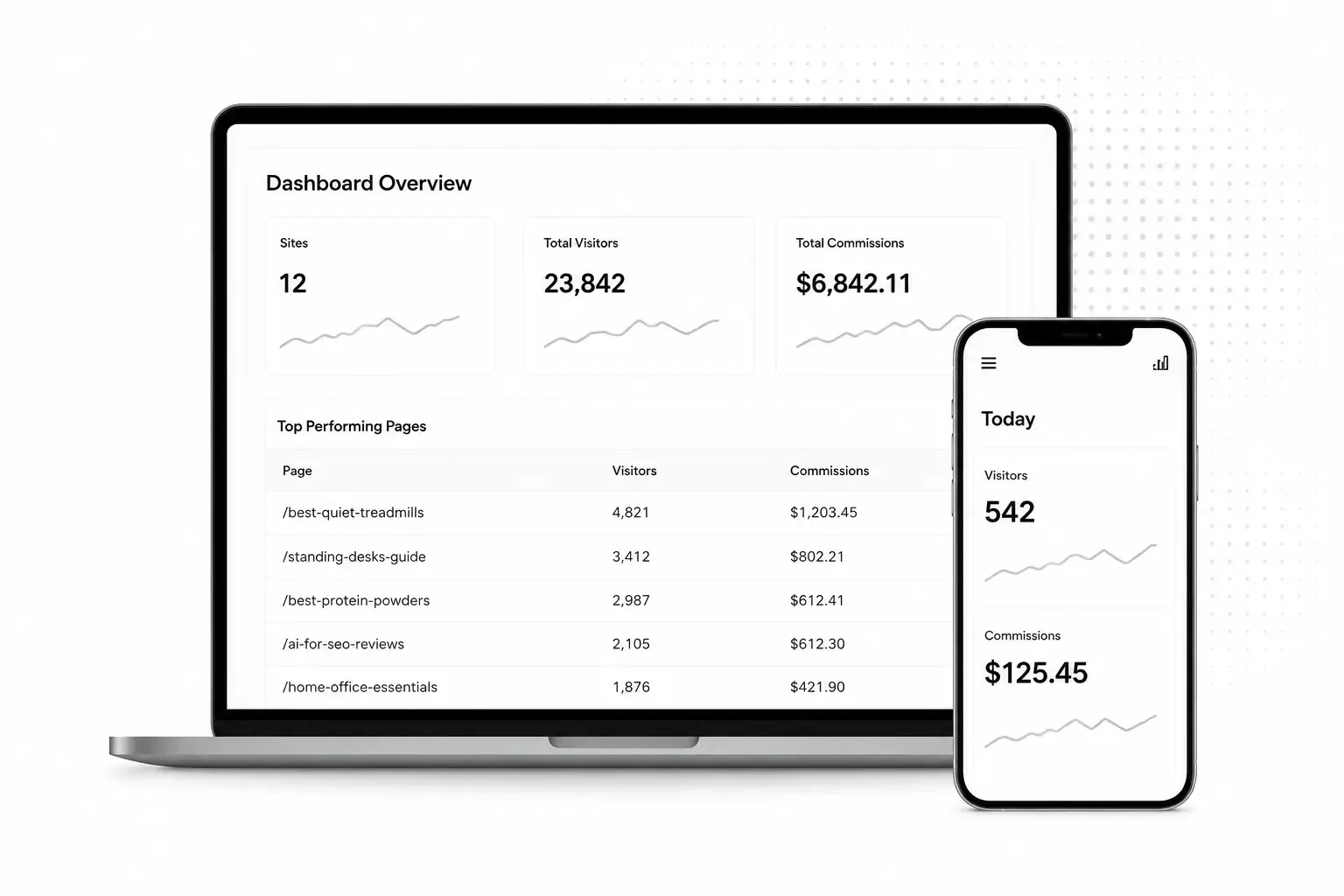
I also use Google Analytics to track which articles actually convert. Some topics bring traffic but no sales. Others have low traffic but a high conversion rate. Over time, I double down on the profitable topics and let the ai handle more articles in those niches. This feedback loop is what separates a real business from a hobby site. Tools like Semrush and Ahrefs help me find new angles within those profitable niches, and I feed those angles back into the ai to keep the content fresh.
The Human Element Still Matters
Neil Patel and Brian Dean from Backlinko have both written extensively about the importance of unique value in content. They are right. Google rewards pages that offer something the competition does not. That something is usually a personal story, a data point from your own tests, or a perspective that only comes from experience. Ai content creation can handle the heavy lifting of structure and phrasing, but it cannot replace the voice of someone who has actually used the product, visited the place, or solved the problem.
I see a lot of new affiliate site owners who think they can set up a site on Medium or WordPress, pump out ai articles, and wait for the money to roll in. It does not work that way. You still need to build authority. That means writing about things you know, linking to reputable sources, and engaging with your audience. HubSpot publishes a lot of good research on content marketing, and one of its consistent findings is that authoritative content outperforms generic content over the long term. That holds true whether you write by hand or use ai.

For me, the sweet spot is using ai content creation to cover the middle of the funnel: comparison posts, best-of lists, and how-to guides. Then I write the high-authority pillar pages myself, or at least heavily rewrite them with my own experience. That hybrid approach keeps the site growing fast while maintaining the depth that search engines and readers both want.
If you are just starting out, my advice is to pick one niche you actually care about. Learn the products. Use ai to scale the content around that knowledge, not to replace it. Check your data in Google Search Console and Google Analytics regularly. Adjust based on what you see. Over time, the combination of ai efficiency and human judgment will build a site that generates passive income without requiring you to be a celebrity or a technical wizard. That is the real promise of ai content creation for affiliate marketing.